London’s ambition is to build a new architecture for a contemporary health and care system that puts residents and communities at the centre. This needs to include a wide range of partners across the NHS, Local Authorities and the Voluntary and Community sector to innovate together to develop new models and approaches that will provide integrated and holistic care at the heart of the neighbourhoods in which people live. Without making improvements to health and care, public services will continue to be overwhelmed by the inexorable growth in activity and demand, with users experience being that of fragmented care and disjointed services. The changes required are as much cultural and behavioural as they are structural and require leaders that have the capabilities to facilitate complex transformational change across a whole system and across multiple organisations.
02. The Objective
The purpose of this 9 month programme was to support leaders to think differently about the way they behave and the way they interact across a system and how that can lead to better outcomes for local populations and the experience of a more joined up care offer. It is also about giving participants the practical tools to enable them to lead the delivery of ‘real work’, finding ways to overcome system blocks, and tackle complex issues through a systems leadership approach.
At the same time as working on themselves individually and collectively, they did real work on issues that impact on health inequalities.
03. Implementation
This programme needed to involve people from health, social care and also the voluntary and community sector if it was to make any difference. So we did important preparation work with stakeholders from all of those sectors, comprising a steering group who oversaw the programme and a sponsor group at Chief Executive level who attended session 6.
The programme ran over 9 months with 38 participants who were deliberately selected for diversity and were equally divided between the three sectors. We derived an approach from Open Space methodology to create 5 self selected groups on five health inequalities issues. The core process was six facilitated in-person days with the whole group. In addition to that we created: an online orientation session to begin; a masterclass in influence; coaching support to the small groups on request and the groups did independent work in between to make progress on their issue.
Session 1, of the six in person days, focussed on stimulating their thinking about the needs in London and about research on health and wellbeing, by introducing two guest speakers. We placed emphasis on building the community in the room and on empowering people to shape the work they would do.
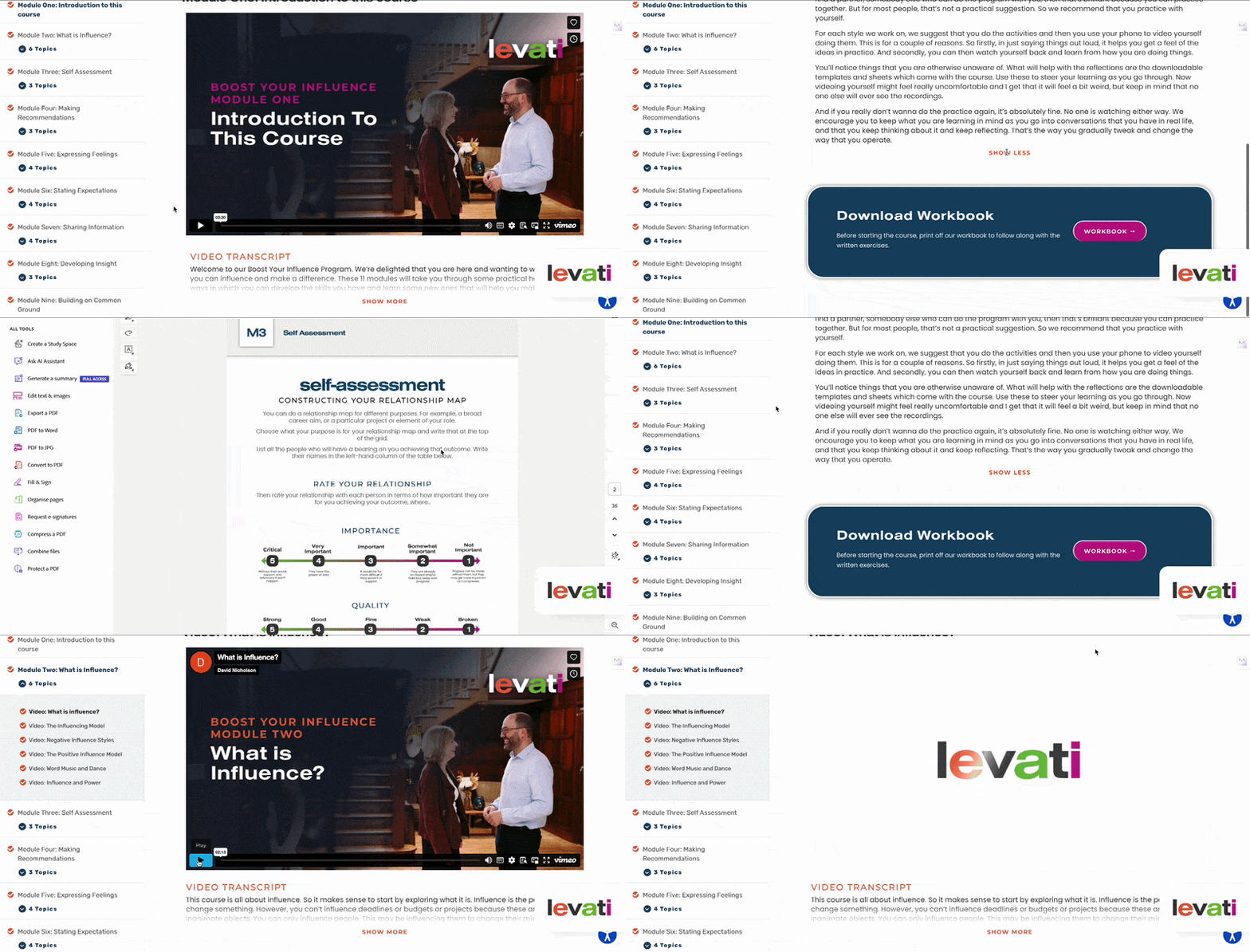
Over the process of sessions 2 to 5 we covered: the Cynefin Framework as a way of stepping out of entrained thinking; Rich Pictures to understand the fullness and messiness of the systemic issues; group dynamics to help people see what might be going on in their group and in other groups they work in and how they can best work with that; Public Narrative as a method of engaging and inspiring people; empathy mapping to develop skills in partnership working; influencing skills to help them make things happen whilst building or at least maintaining relationships. Plus the programme was experiential, so we worked live with what was happening in the room, practiced skills and gave and received feedback. Some of the most powerful moments were when we convened conversations of the whole group reflecting together.
Session 6 pulled all of these threads together and we invited each of the 5 issue groups to convene a conversation with the sponsors about where they had got to with their issue.
04. Insights
Participants valued the tools and approaches they were introduced to and were starting to use them in their weekly work. Their comments suggest they are behaving and thinking differently, for example-
“I always connect with people now before I dive into the work @ hand.”
“I am more closely engaged with the communities affected.”
“I have challenged colleagues + myself to work differently.”
“I create space & time for building closer relationships with NHS & Voluntary sector.”
“I create rare and valuable space for collective thinking & reflections and the bandwidth and headspace to build relationships.”
“I have tried to be more gracious to others in the system. “More curious + less furious.”
“I sit with the discomfort of not knowing for a bit longer. Not rushing to solutions.”
“I am more intentional about wider system engagement.”
“I am experimenting with feedback, candour and relationship adaptation.”
We noticed that people had been trained for years into a strong linear thinking pattern. This works on the assumption that one can “diagnose a problem”, generate solutions and work through an action plan. It smooths over the fact that for some issues the causes are many and are interrelated and some of the causes are invisible.
The work was helping people to: see patterns; experiment; start somewhere and follow it everywhere; pay attention to intended and unintended consequences; amplify and dampen as appropriate and build strong relationships with a very wide set of stakeholders. This set them up for leading differently and getting better outcomes in complex settings.
05. Conclusion
One of the most powerful aspects of the programme was bringing together a diverse group who see issues from very different perspectives and building trust between them so that they become curious about each other’s world views, experiences and constraints. Several of them told stories about how they were being different as a result of these insights and different in a way that would have a positive effect on health outcomes for Londoners.
When people are co located eg in the same borough or neighbourhood, the impact they can have on local people is amplified and the real work they can do together becomes more granular and less abstract. This is what we will be doing with Cohorts 2 and 3, which already have commitment to go ahead due to the success of Cohort 1.
 Responsive Menu